

In January of 2023 my therapist mentioned C-DID (complex DID) in passing for the first time. We didn’t know then C-DID was the former clinical term for polyfragmented. I remember a caretaker part, Jane, stepping forward to give an answer as to how we were really doing around that time. This was one of the few instances where we would have no amnesia around information being shared. She said,
I feel like I’m constantly swarmed by children.
Polyfragment: A Brief Overview
Polyfragmented DID is at it’s simplest definition: a System with a large count of fragments, complex splitting patterns, and complex internal structure. The threshold for how many Alters and/or fragments that make up a polyfragemented System varies, as indicated by Richard Kluft’s insight:
I defined extreme complexity as the
presence of at least twice as many alters as the upper limit of
the modal range of 8-13, i.e., 26 or more.-Kluft, Extremely Complex MPD, Dissociation Vol. 1 No. 1 Dec. 1988
Initially we believed polyfragmented meant a System who has 100+ alters, as that is the common information found. Here recently, we’ve come to realize this is not the case. While ultimately the “count” does not hold significance in the long term, as it will vary and change as the System heals; in the beginning of healing it does. Our focus here though is understanding what we know of C-DID. We know the structure and splitting patterns of a C-DID System is more complex than “typical” DID. There tends to be more fragments than alters in C-DID; at least in our case for certain. I do want to note here, that while some C-DID Systems have a RAMCOA background, we do not. That and a high part count does not mean definitively the system is polyfragmented and/or C-DID. It is a label a system can chose to adopt if it works for them.
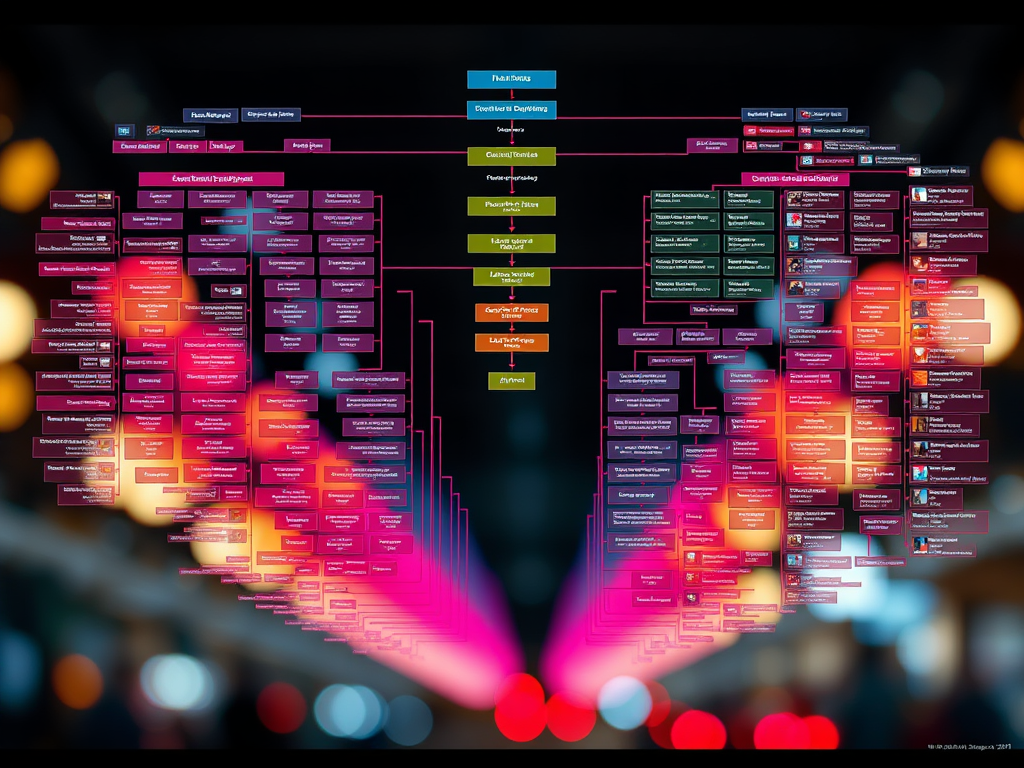
I like to think of C-DID as an in-depth tree graph. The “branches” further extending out to account for the vast majority of fragments. Except there is no singular point where splitting occurred for us. -Dex
The days prior to our therapist mentioning C-DID, we were being bombarded by imagery of Jane being surrounded by children, and a feeling of overwhelm. We were exhausted by the Internal demands for safety and comfort. Our fiancé was (and still is) a rock when we get battered about by the emotional flooding, helping as they can to ease the strain. Oddly enough Jane had fronted briefly to tell our partner of this, except at the time she referred to the feelings as an “over worked daycare worker.”
I’m not certain at the time of first writing this if this particular moment in therapy predates the experience of seeing a cafeteria full of various aged persons, from infancy to young adults-but primarily children up to teens-Inside or not. What I am certain on is that moment in of itself led to us repeatedly over the last year since to sit back in awe at how vast we are. That day our therapist mentioned “C-DID,” half of us internally froze. The other half asked them if they meant we were 100+ or more.
I wouldn’t say 100, more like upwards of 50. You do have a lot of fragments, and are a larger system.
-The Therapist
Upon hearing that we sat back in the couch, a swirl of emotions and chatter starting to boil. How could they say that so calmly? We’re not that large of a System are we? We always felt odd about the sheer size of our System, our experiences did not feel as if it met some criteria to necessitate that amount of splitting. Even early on when we would come across the term polyfragment we found difficulty in relating. Now, we see why. We did not understand the differences between a part and a fragment. We only knew there were a handful of us, and that there were many more in hiding.
The Rabbit Hole of Fragmentation & Presentation
In the last few weeks the need to understand more of our internal structures became more prominent. We understood we had a sub-system, and what felt like myriads of fragments. A few years back, our therapist mentioned “splinters,” as a way of describing fragments. 1 or 2-dimensional pieces if you will. The idea of mapping our structure had always been a challenge for us. The dissociative barriers often prevented us from being able to identify where and when splitting occurred. Until recently.
Two weeks ago I sat down with our journal, and very gently asked if anyone knew roughly how many fragments came about during a very specific time-frame of our life. Quietly the responses came. Two here, six there, and so on. At least 37 in total, 20 of which were from a singular event, by the end. In “typical” DID a traumatic event causes a split where one part holds the memory, and the other contains the emotions; typical of structural dissociation of an ANP (apparently normal part) and EP (emotional part). For us, these events caused the level of splitting to be further. One held the audio, another the visual, another the physical, another one specific emotion, and so on until the event was fractured into “bite-size” pieces.
With this knowledge things clicked into place. The fragmentation made it challenging to put what sparse memories I have together. It explained the reasons why I would suddenly remember a detail about an event, and just as quickly “forget,” but have the lasting impression I had uncovered something. It explained why our Littles often moved in what felt like a group. It explained why when we processed a portion of an event, that part had a few fragments fuse and integrate, and we felt smaller. Not by much, but we recognized it happened. It explained how we compartmentalized overall.
We then stumbled across the term “epochal division.” A clinical term coined by Kluft to describe where major life changes cause systems to replicate some or all parts, and the prior either remains active or becomes more covert, or even dormant. Well before we knew about our systemhood, we experienced life in 1-2 year stints, and thought this was normal. It was not uncommon for the one fronting at 14 to only recall back to 12, but feel as if those experiences belonged to another. Stumbling upon epochal division then led to a discovery to various presentations of DID1, wherein we noticed Epochal or Sequential.
Epochal or Sequential MPD – When an alter emerges it takes over for a long period of time before the next alter takes over for another long period of time. While one alter is out, the others go dormant.
-Nurseslearning, Common Presentations of MPD
Epochal or Sequential DID is how we presented for upwards 20 some years, though the later portion of those 20 some years we began to have a mixed presentation, and at present we still do. During those decades there was an active avoidance on my part to not remember anything from the years prior. By my early teens I developed a mantra of , “get through today, process later.”
Puppeteering or Passive-Influence Dominated MPD – The host is dominated by alters that rarely emerge. If the host is unaware of these alters he/she feels like the victim of influences that force behavior in a direction not chosen.
Prior to realizing Dex was now Host (a whole story unto itself), this would be the closest description to understanding how I perceived life at the time. I felt wildly out of control, as if I had no true influence upon my life. It was as if I was at the mercy of internal whims. I know that sounds more akin to lack of impulse control, however those moments were always proceeded by out of body experiences, watching helplessly as “I” made decisions or responded to things in manners I typically wouldn’t. Clearly there were moments of identity confusion, and a sense of separateness I couldn’t escape. I felt more like a vessel housing barely understood aspects of Self, and even worse a keen knowing I can’t find the “me” amidst it all.
1.I still need to give Kluft’s paper Clinical Presentations of Multiple Personality Disorder a proper thorough read to understand the nuances of certain presentations.
Internal Structures
Kluft found those with C-DID to have vast Internal Structures, expansive and often complex inner worlds. For a while this did not apply to us, as to my understanding, such a place did not exist. Rarely did I have access to it; let alone understood this was predominantly a visualization technique. Years before therapy I was not able to “go there,” at will. Which to be fair, not all Systems have these spaces, and that’s okay. The closest place I had then was a floating rock out in space. There was a soft light descending from the “top.” The area felt encompassed in a barrier that was marbled black and red in a swirling pattern.
With work in therapy, the whole structure changed and grew with time. The middle layer (layers being a topic for another day) became an abundant “central” point. It includes fountains designed around our spiritual path, cabins, woods, beaches, islands, Void and Abyssal spaces, and a castle. There is not a central building where all of us reside. There are spaces meant for conferences, and areas tucked within areas. For instance one cabin has a full infirmary and nursery inside of it. These spaces often serve more as metaphorical imagery, and can provide therapeutical insight. Such as in the case when we “looked inside” and found areas ablaze as if war had broken out.
While these spaces may be metaphorical there is a feeling of the areas being real. We know these spaces do not really exist in reality, but the importance to us is real. Some of us treat these areas as our own pockets of the ether. Sacred and safe. Recently we’ve realized the area we consider “top” is the space used for co-consciousness; or the space closest to front without fully being in front. It’s there we can communicate active or passively without causing distress to the Host (usually). Blending happens there as well.
The middle area is accessible to almost all of us. The second-to-last layer is essentially what I remember: the floating rock and dim light in a pitch black space. Except now there’s a tree, half dead, half in bloom, and a small shack. Towards to the bottom of that space is a hatch. That hatch leads to a space reminiscent of the expansive hallway in The Matrix 2: Reloaded. Not much is known about that area yet.

I do not know what lies behind the doors, only that there are (probably) fragments. -DJ
If I had to hazard a guess, the third layer probably contains fragments, and more than likely those of the sub-system. The barriers between the layers gradually go from transient to rigid. Aptly so as our amnesic barriers are still a challenge to contend with. We do not know the ins and outs of our structures in its entirety, and it will change as we grow and heal no doubt. It is, presently, strange to be in a place of acceptance. Acceptance not only of our multiplicity, but to accept the nature we’re highly fragmented. As we have been since any of us can remember. It is hard to not see the evidence anymore. It explains so much about us and our ways of functioning. In time we will explore the more finer nuances, but for now this is a start.
-DJ & Dex
 SheepieDex
Leave a comment